Thursday, January 31, 2013

Movie Review: The Day of the Locust (1975) Dir. John Schlesinger

By train, by car, by bus, they came to Hollywood... in search of a dream.


The Day of the Locust by John Schlesinger
Rating: 4.5 out of 5 stars

Blurb: The Day of the Locust is a movie about Hollywood and its corrupting touch, about the American dream turned into a sun-drenched California nightmare. John Schlesinger and Nathanael West's Hollywood is not the glamorous "home of the stars" but a seedy world of little people, some hopeful, some despairing, all twisted by their by their own desires - from the ironically romantic artist narrator to a macho movie cowboy, a middle-aged innocent from America's heartland, and the hard-as-nails call girl would-be-star whom they all lust after. An unforgettable portrayal of a world that mocks the real and rewards the sham, turns its back on love to plunge into empty sex, and breeds a savage violence that is its own undoing, this movie stands as a classic indictment of all that is most extravagant and uncontrolled in American life.
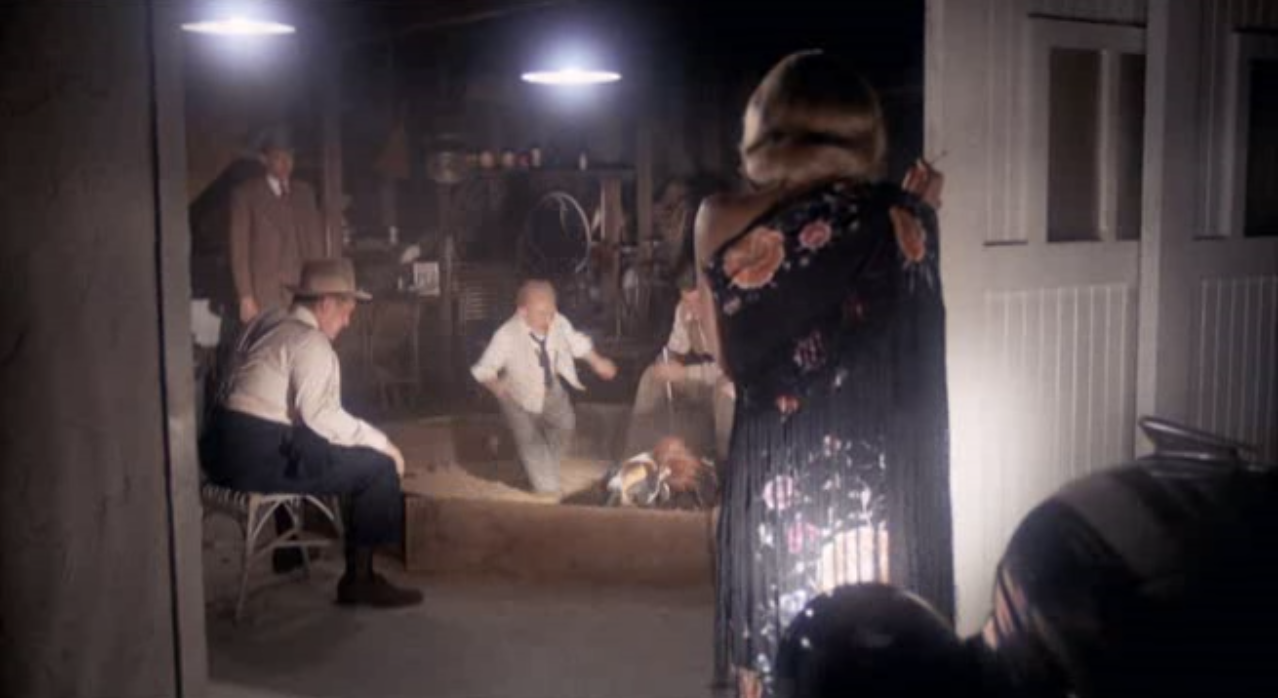


Thoughts: John Schlesinger, director of superb dramatic cinema with a slightly surreal edge in throughout the sixties and seventies was the perfect choice to direct this Waldo Salt adaptation of the Nathanael West classic of American literature, set in Hollywoodland just prior to World War II, it depicts the alienation and desperation of a disparate group of individuals whose dreams of success have failed to come true in a daring, epic that is at times brilliant, and fills it with a series of razor edged performances, particularly that of Donald Sutherland and Oscar nominated Burgess Meredith.

Subtlety isn't the film's strong suit but the bigger than life quality is so much a part of it, and West's novel, that you accept it as part of a reality projected as fantasy style intended by the film maker which is only heightened by the intense and surreal nature of the ever growing scale of the key set pieces as the film builds to it's unforgettable finale.


It starts off very slowly, introducing you to the world of Hollywoodland in the Thirties; to Faye and her desire for wealth and fame, to her father Harry the forgotten star, to Tod the bright eyed artist, to Adore the obnoxious "child star" and Abe the angry dwarf but it builds in to something so much more via a series of unexpected and slightly surreal slice of life events. And then the climax, a sequence of events much more powerful that almost anything else I've seen from Hollywood and if you haven't read the novel really quite unexpected in it's content. As with the book until this point I was merely enjoying it but the effect the climax has on the overall reaction to the movie is incredible, making you reassess what has gone before.


This is not about the film industry or about shallow, rich people, it is so much more than that, it is about the effect of Hollywood and fame on the everyday reality of normal working class people.

John Schlesinger directed Midnight Cowboy, Billy Liar, Marathon Man, Darling and A Kind of Loving and still this one might just be the best of the lot.


Wednesday, January 30, 2013

Movie Review: Killer's Kiss (1955) Dir. Stanley Kubrick


Killer's Kiss by Stanley Kubrick
Rating 3.5 out of 5 stars

Blurb:  A nightclub dancer is befriended by a down on his luck boxer after he saves her from a beating at the hands of her boss and lover. The jilted lover is a mentally unstable gangster who seeks vengeance for this slight.


Thoughts: A boxer nearing the end of his career, a dancer in a seedy nightclub and her sinister gangster boss and patron come together with some style in Stanley Kubrick's second feature. It's 63 minutes of low budget experimentation with the noir form by a director who would go on to achieve great things starting only two years later with The Killing.


The plot leaves a lot to be desired, in that there's hardly any of it and what is there hardly makes much sense. I've never noticed an hour long movie start to feel interminable before but Kubrick takes essentially ten minutes of story and stretches it out just a little too far with his interesting stylistic choices.

The man waiting at the train station telling how he got there in flashback is a pretty decent framing device but from there the flashbacks become more and more blunt as the movie goes on. This is not a lush Hollywood production he seems to be stating by drawing our attention to his tools in such a way. In other hands you might call it bad directing but in hindsight it's easy to see a master experimenting and doing things other film makers wouldn't. In one flashback the dancer tells an absurd story about her father and sister, a ballet dancer, in voice over; what Kubrick offers us visually during this sequence may be more bizarre and more unusual than in any other noir film, especially this kind of B-movie, a ballet dancer performing alone on stage in stark light and the blackest shadows.
 

The ballet sequence isn't alone in being visually impressive; throughout there are breathtaking moments of framing, use of light and shadow that would put the German Expressionists to shame, use of negative film stock for a surreal nightmare sequence, excellent use location shooting and a final showdown with an axe wielding gangster in what appears to be a mannequin factory.

A must watch for fans of noir and fans of Kubrick.


Thursday, January 24, 2013

24th Alliance Francaise French Film Festival Australia


The Alliance Francaise French Film Festival sponsored by Peugeot (man I love me a Peugeot, my first car was a 306 diesel and he's not been replaced satisfactorily, if anyone at Peugeot is reading this and wants to sponsor the blog by giving me a free car, I'm all ears) this week announced it's selection of 43 films for the 24th edition of the premiere foreign film event in Australia. Playing in cinemas across six cities in March and April they promise a program that will enchant the most discerning cinephile with an eclectic selection of the finest movies to emerge from France over the last 12 months.

I won't lie to you, this festival has a habit of packing its schedule with comedies aimed at middle aged women but in amongst the excessive volume of "fun", "charming" and "vibrant" films there look to be some real cinematic gems worth taking the time to see.

The festival will visit the following cities:
Sydney 5- 24 March
Melbourne 6 - 24 March
Canberra 7 - 26 March
Brisbane 14 March - 4 April
Adelaide 19 March - 7 April
Perth 19 March - 7 April

which is fine for me, Perth usually being left out of interesting events however means I can sympathise with those cinephiles in other Australian cities who aren't considered important or educated enough for subtitled movies.

In an age of digital projection screening these types of movies is easier and surely cheaper than ever, isn't it about time that we all had the opportunity to see something other than Hollywood films in our own towns? Let's get this expanded, no city left behind, demand more from your local cinemas people!

Enough grandstanding, here's my selection of seven festival highlights:

Apres Mai (Something in the Air/After May)
Dir. Olivier Assayas 


1968 was a year of great unrest in Europe, it was the year that saw revolution in the streets of Paris, the year Godard declared the death of cinema; the wake of these tumultuous events is the setting for Olivier Assayas new loosely autobiographical coming of age film. A multilingual international drama, that takes place in France, Italy and England. Starring Clément Metayer, Lola Créton, Félix Armand.

Les Enfants du Paradis (Children of Paradise)
Dir. Marcel Carne
 

Voted the "Best French Film in History" by the French Film Academy in 1990 this 190 minute film has been digitally restored and will close the festival. Filmed during the German occupation, this French milestone centers around the theatrical life of a beautiful courtesan and the four men who love her.

Ernest et Celestine (Ernest & Celestine)
Dir. Benjamin Renner Vincent Patar Stéphane Aubier


A wonderful 2D animation realised in vibrant watercolours, tells the story of Ernest, a grumpy but affable bear who wants to be an artist, and Celestine, a mouse who wants to avoid a dental career. The unlikely friends live in two parallel worlds - the bears above ground and the mice in a subterranean village below. When their improbable friendship and criminal activities are revealed, they must stick together to withstand the disapproval and intolerance from both worlds.

Dans la Maison (In The House)
Dir. Francois Ozon
 

A metafictional thriller. A teenage boy writes stories about a fellow classmates family and slowly the lines between reality and fiction begin to blur. A captivating and ironic look at the art of storytelling itself, Ozon has crafted a clever and seductive film.

Laurence Anyways
Dir. Xavier Dolan
 

From the 23 year old writer/director/star of Les Amours Imaginaires this is the story of a wild and unusual love. Set in the 1980s and 1990s, a man tries to salvage his relationship with his fiancée after revealing to her his aspirations of becoming a woman. Rated 8.4 by Bonjour Tristesse, this was always going to be a must-see.

A Perdre la Raison (Our Children/Loving Without Reason)
Dir. Joachin Lafosse


A success at Cannes including an award for best actress this is a relatively slow moving story of a devastating relationship as a young woman's increasingly intolerable family situation leads her to commit a desperate act. This was Belgium's entry for the Academy Awards and is the subject of another fine review at Bonjour Tristesse.

L'enfant d'en Haut (Sister)
Dir. Ursula Meier


A beautifully shot film about the relationship between Simon and Louise, two young siblings struggling to survive alone near a Swiss ski resort. Capturing the gulf in the lifestyles of the rich tourists and the poverty stricken locals plus the exploration of the sibling relationship this film won the Silver Bear in a Mike Leigh led jury at the Berlin Film Festival.