Announcing the new Tuesday feature here at blahblahblahgay, Noir-a-Thon.
This has been months in the making, research, planning, ordering DVD's, organising our thoughts, booking time off of work etc. and now it is finally here. The history of Film Noir blogged week by week by myself and Leah from
What Indie Nights?
We have selected 125 (at the current time) movies ranging from the proto-noir of 1930's The Blue Angel through to 2010 and Christopher Nolan's neo-noir Inception.
I am still a student of film at heart and I got a little carried away in writing a brief introduction to what film noir is for me but for those of you wanting a little background on what we shall be looking at please feel free to continue reading.
Film noir is more a style of film rather than a genre, noir being the French word for black and black being very much the order of the day in these movies; not just being full of shadows and dark imagery but also of mood. The prevailing mood of the film noir canon is that of despair, heroes go in to battle against an irrational universe with the existential knowledge that death is on their back and maybe not this time, but soon, they won't be coming out of it alive. Nobody lives forever, everybody dies.
Taking their cues from German expressionist cinema, directors working in film noir created a distinct visual style; oddly angled shots, moving cameras, location shooting, a specific use of shadow and light, using these tools to add meaning to almost every shot.
The heroes are almost all alienated from society in one way or another, those unspoken horrors of the past; the long dark teatime of the soul is what binds the narrative together. It's not just the P.I.'s who have the dark past and who place self preservation above all else - every noir hero is running on empty, dead inside or on the verge of becoming that way, suspecting everyone, never fully trusting anyone. And it's a good thing too because those femme fatales would have taken all the men for a ride.
Obsession could be said to drive these alienated heroes onwards; every P.I. won't quit until he's solved the case, there's no time for love when you think the wrong guy has taken the fall, when the great whatsit is still out there, all these men on their knees so desperate to feel again that they cross the line and enter the underworld, rob a bank, kill a man, then blame it on a woman.
Classic noir is most definitely an American style of film, only a few non-US productions have made the list during the period 1941 - 1958 and there was only a slight increase in numbers after that date as we move in to neo-noir, film makers such as Kurosawa and Melville making similar stylistic and thematic choices out of respect for the American movies they loved watching.
We'll be using, amongst others, Dugnant's major noir themes from his 1970 essay Paint It Black and Ebert's list of noir identifiers.
Dugnant suggested that all noir films will include at least one of the following motifs:
Crime as social criticism (miscarriage of justice, bent cops, etc.)
Gangsters (organisational, cops vs robbers, etc.)
On the run (innocents or dangerous criminals looking to escape their fate.)
Private eyes and adventurers (down these mean streets must a man go who is himself not mean.)
Middle class murder (murder taken lightly, men led astray by sex, women as executioner and victim.)
Portraits and doubles (claustraphobia and paranoia, in the dark rainy nights it's hard to tell one character from another.)
Sexual pathology (sadism, doomed love, love-hate relationships.)
Psycopaths (morally bankrupt, spirit of society, tragic confusion.)
Hostages to fortune (largely domestic violence.)
Blacks and reds (political, gangsters as nazis and commies.)
And Ebert has a (slightly) tongue-in-cheek
list of noir identifiers:
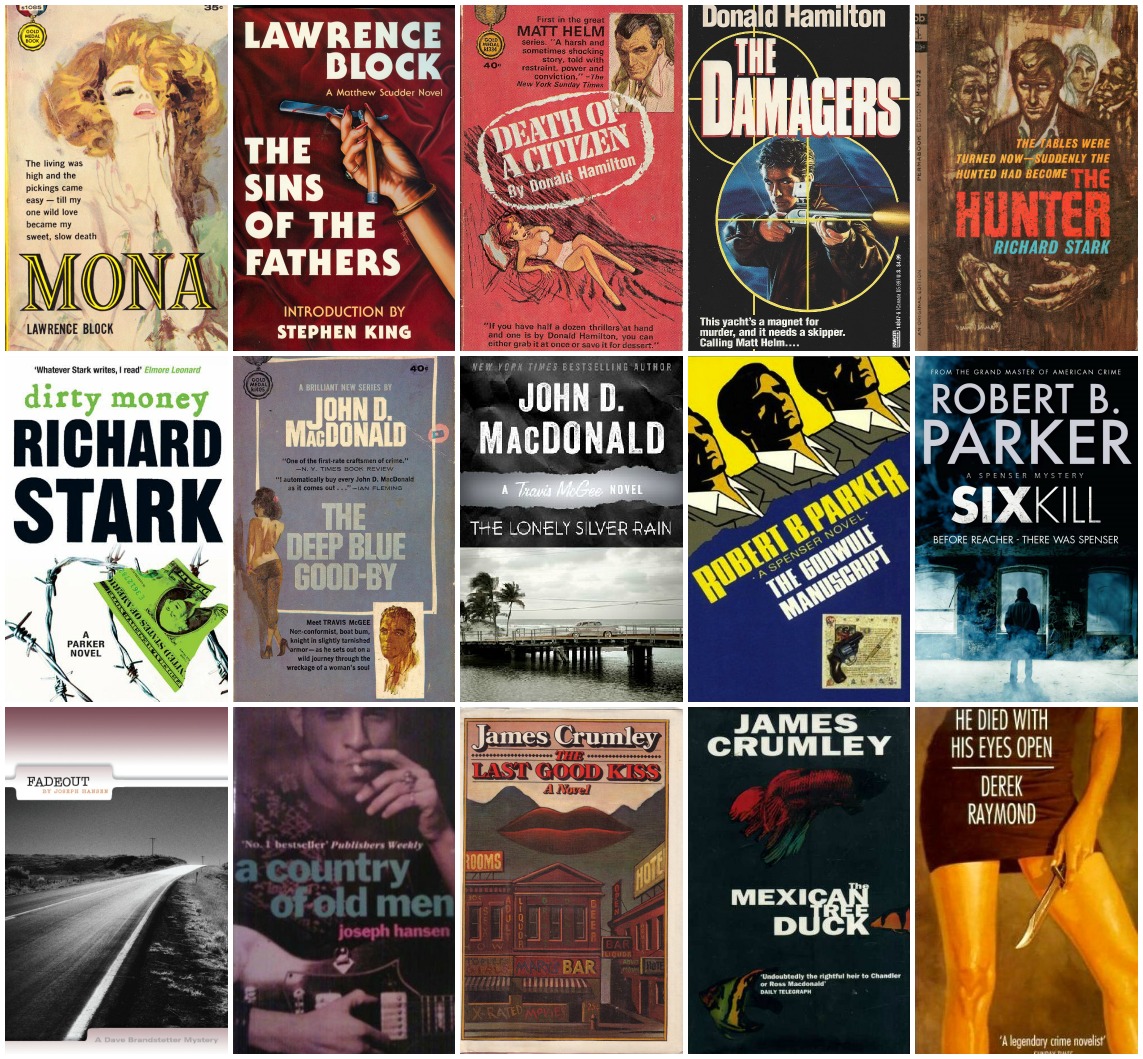
1. A French term meaning "black film," or film of the night, inspired by the Series Noir, a line of cheap paperbacks that translated hard-boiled American crime authors and found a popular audience in France.
2. A movie which at no time misleads you into thinking there is going to be a happy ending.
3. Locations that reek of the night, of shadows, of alleys, of the back doors of fancy places, of apartment buildings with a high turnover rate, of taxi drivers and bartenders who have seen it all.
4. Cigarettes. Everybody in film noir is always smoking, as if to say, "On top of everything else, I've been assigned to get through three packs today." The best smoking movie of all time is "Out of the Past," in which Robert Mitchum and Kirk Douglas smoke furiously at each other. At one point, Mitchum enters a room, Douglas extends a pack and says, "Cigarette?" and Mitchum, holding up his hand, says, "Smoking."
5. Women who would just as soon kill you as love you, and vice versa.
6. For women: low necklines, floppy hats, mascara, lipstick, dressing rooms, boudoirs, calling the doorman by his first name, high heels, red dresses, elbowlength gloves, mixing drinks, having gangsters as boyfriends, having soft spots for alcoholic private eyes, wanting a lot of someone else's women, sprawling dead on the floor with every limb meticulously arranged and every hair in place.
7. For men: fedoras, suits and ties, shabby residential hotels with a neon sign blinking through the window, buying yourself a drink out of the office bottle, cars with running boards, all-night diners, protecting kids who shouldn't be playing with the big guys, being on first-name terms with homicide cops, knowing a lot of people whose descriptions end in "ies," such as bookies, newsies, junkies, alkys, jockeys and cabbies.
8. Movies either shot in black and white, or feeling like they were.
9. Relationships in which love is only the final flop card in the poker game of death.
10. The most American film genre, because no society could have created a world so filled with doom, fate, fear and betrayal, unless it were essentially naive and optimistic.
We're really excited by the prospect of viewing 80 years of film history and we hope you'll come along for the ride. Feel free to watch along with us, the full list of films can be found at the brand spanking new Noir-a-Thon page located all over the blog and
here and we'll be viewing in chronological order.
Edit: We've left some films out for various reasons, some such as the James Cagney movies I am not fond of, some such as Blood Simple I've seen many times and didn't feel like buying at the time of making the list and others just weren't readily available on DVD at reasonable prices or at all. Phew. I knew I'd left something important out.

 Fierce Bitches by Jedidiah Ayres